Why Your To-Do List Is Fuelling Overwhelm Paralysis (and How to Stop)

How often have you sat down at your desk, looked at your long to-do list and felt an immediate sense of overwhelm? There is so much to do, you can’t see how you’re going to get half of it done and anyway, most of it’s things you don’t particularly want to do. So instead of getting stuck in and ticking off tasks you find yourself scrolling through your phone to escape that feeling of overwhelm. This is what I call overwhelm paralysis, and if you are relying on a standard to-do list to manage your workload, you are probably making it worse.
The Problem with Using a To-Do List as a Daily Guide
Whilst to-do lists are a great way to get started, when it comes to getting stuff done, they also come with a whole load of problems. It’s great to get all of those tasks out of your head and down on paper, because your brain is great at coming up with ideas, but not so good at storing them. Inevitably, if you don’t write them down you’ll forget stuff. So yes, you need to have a to do list as a place to keep a record of what needs doing, but when you use it as a guide to what to do each day then you’re probably going to feel overwhelmed, often. And there are several reasons for this.
The first is the ‘decision fatigue’. What I mean by this is that when you use a to do list inevitably you are choosing several times throughout the day what you are going to do next. Often a to-do list is just a random collection of tasks. You’ve written it over several days, there are probably tasks that you’ve carried over from one to-do list to the next. Major goals, which will take you several weeks to complete are nestled in amongst two-minute ones. And as you go through your day you choose from that list what you’re going to do next. So that’s a lot of decisions you’re making every single day.
Decisions are not always made quickly. There are tasks on your to-do list that you know you should be doing, but you keep putting them off. So you spend time arguing with yourself. Your higher brain is telling you that you should really start that big project today, whilst you still have plenty of time and your primitive brain is trying to persuade you that you’ve got plenty of time until the deadline. That doing the small, easy tasks is going to feel much better, much more comfortable. And when you’re making decisions ‘in the moment’ usually the primitive brain wins, which means at the end of the day there’s that little nagging disappointment and worry that you didn’t start that big project, that the deadline is one day closer and that the amount of time you’ve got to work on it is getting smaller and smaller. Cue overwhelm.
And what eventually happens is that deadline starts looming large, it’s so close it can’t be ignored anymore. And then there’s panic, because there’s so little time to finish it in. Everything else has to go out the window and there’s a mad scramble to get that task done which you’ve known about for months (if this is you take a look at this post ‘The Myth of Why You Thrive Under Pressure’ as I wrote it just for you). So surprise surprise, you feel overwhelmed!
The next problem with solely relying on a to do list is the lack of time estimates for the tasks on your list. As I’ve already said, because it’s written out randomly, those major projects are given as much space on your to-do list as sending an email. One takes hours and hours of work, the other no more than five minutes. By looking at your list you’ve no idea how long any of this is going to take you. Are you going to get it all done or aren’t you? It’s impossible to know and again this can create a feeling of overwhelm. You just want to go and bury your head in the sand – or in Netflix!
Inevitably, even if you do your best, you’re unlikely to get everything done that’s on your list. And you’ve probably added tasks to that list – in fact it might be even longer than it was when you started your day. So you get to 5pm and now you have even more tasks to do than you had at 9am – cue overwhelm!
So what can you do? How can you tackle that constant feeling of overwhelm? To avoid falling into this trap of overwhelm paralysis you need to devise a plan of how you’re actually going to get all of those tasks done. Because the overwhelm comes from the thought that there’s too much to do and not enough time to do it all. You have to show your brain that all of this is doable, that there is plenty of time… and the way to do this is to time block.
How to Start Time Blocking Without the Stress
If you've heard of time blocking before or you've tried it and it didn't work for you — stick with me. I'm going to give you an easy way to get started because, as I'm sure you will agree, you want to stop feeling overwhelmed, and just using a list probably isn't working for you.
So, what you need to do first is to take out your to-do list—your big to-do list, that scrappy list with everything on it that you've got to do. Firstly I want you to spend some time thinking whether there's anything else you need to be doing, to get everything out of your brain. Because, as I said, our brains are great at coming up with ideas, but they're not so good at holding them.
Now, once you've got that list, you're probably going to feel a bit overwhelmed looking at it, but remind yourself, you don’t need to do it all today. In fact, what we're going to do is take a small segment of that list—the tasks that you want to do tomorrow.
But before you even do that I want you to look at whether there's already anything enjoyable on your calendar for tomorrow. Even if it's just a cup of tea with a nice book for 15 minutes, there has to be something to look forward to (it’s the law, or at least it’s a rule of mine). It can be outside of your work day—something in the evening, or if you enjoy exercise, maybe you’re going for a jog with a friend in the morning—but I want there to be something nice on your calendar for tomorrow.
Once you've ensured that, I want you to look at your master to-do list and choose the things that you want to do tomorrow. Now, when I say "want to do", they may be things that you don't really feel like doing, but you know you need to get done. When you're planning in advance, you're going to be using your higher brain; you're tapping into that part of your brain which makes good decisions and knows that the big project or the deadline coming up in a couple of weeks should really be started now. You can avoid that last-minute panic even if you just work on it for half an hour tomorrow. So, decide which tasks you're going to do tomorrow, write those out on a shorter list, and put the big list in the drawer. You're going to forget about that; you don't need to look at it.
Remember, the tasks on your major to-do list that is in the drawer—the ones that you haven't chosen to do—are ones that don't need to be done tomorrow. So, you can put them out of your brain. You shouldn't feel worried that you're not starting on them tomorrow. It should feel okay to put that list away in the drawer. On the list in front of you are just the things that really do need to get done tomorrow, or big projects that you need to start in advance so you don't feel overwhelmed in the future.
Now, the next thing is to go through those tasks and estimate how long each one is going to take you. Remember: the point of this exercise is to show your brain that everything you've got to do tomorrow is doable. Now, it may be that you find out it doesn't all fit into your workday; then you need to rethink. Is everything on that short list something that needs to be done tomorrow? If it is, you need to either revise your timescales or think about whether there's somebody else that you can delegate to.
Sometimes we’re not very good at estimating how long things take so this is going to take practice. But also, one of the tips that I give is to be able to increase your productivity and ability to focus and immerse yourself in a task by set a timer; you'll be amazed actually how quickly you can get stuff done when you do, but that’s a whole other blog post.
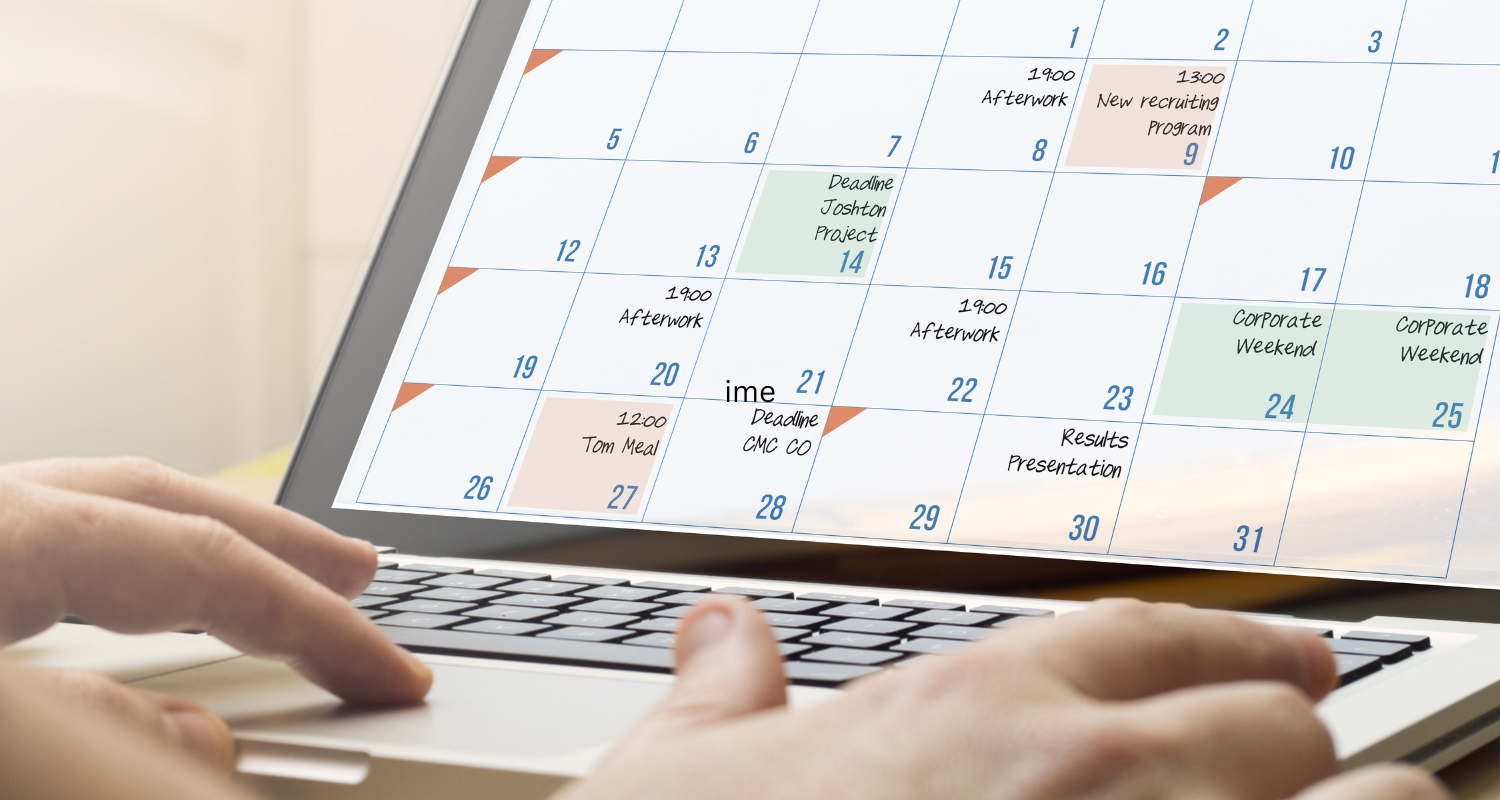
Now, once you've got that list with the time estimate against it, I want you to give every task a space on your calendar. Basically, you're making an appointment for a meeting with yourself for that task. And as I said, everything should fit onto your calendar with gaps in between for breaks and that fun task that we talked about earlier. So do that and see how it feels when you can look at your day and see that everything you want to do tomorrow fits in. Feeling less overwhelmed?
Now I’m not promising that this won’t need work, it will. But the more you do it the better you will get – like anything else. The hard part is actually showing up tomorrow and doing what your calendar tells you. But you should work more quickly because you’re not wasting time arguing with yourself about what to do. You’ve already decided – yesterday. Your job is to just get on with it.
Conclusion
So, if you’re currently staring at a long, messy list and feeling that familiar weight of panic in your chest, take a breath. The problem isn’t your workload; it’s the way you’re viewing it.
By moving away from the endless scrolling of a to-do list and into the structured clarity of time blocking, you’re doing more than just organising your day. You’re giving your brain the evidence it needs to believe that your goals are achievable.
Give it a go tonight. Pick your tasks for tomorrow, guesstimate your timings, and book those appointments with yourself. Put that master list in the drawer and let it stay there. You might just find that when you wake up tomorrow, instead of a sense of dread, you actually have a plan you can trust—and maybe even a cup of tea and a good book to look forward to.